Her profile is LOADED with sources on Byzantine dress from ceremonial garments of military to bridal costume to even eunuchs! I nearly fell off my couch! They’re RECENT also, and free! FREE. I had to share! The only way Byzantine personae in the SCA will grow is by the continued research and study of the subject. Bamf. You’re welcome. Now if you excuse me, I need to go download all the things to my Kindle Fire. ❤
They aren’t scanned fabulously, but heck, you get how they work. These WILL be posted on my Eastern Roman Garb page as well, but I wanted to get these on a blog page and tagged for searchability as I plan a better layout for the current page, but this is a huge step in the content direction.
HERE GOES.
Also, let’s try to start using the Greek terms, Kamision and Delmatikion, for Tunica and Dalmatica respectively to help disseminate Greek over Latin.
These patterns are pretty self-explanatory for folks that are used to basic medieval clothing. Byzantine garb is basically all t-tunics, with only a few minor twists. The biggest issue is really the width of your fabric allowing for the nice curved underarm seam, that’s about it. These blocks are not the be-all-end-all ways to make these garments, but rather one interpretation to show you the pieces needed. Once you get a handle on the basic construction, all that’s left is embellishment and sleeve variations.
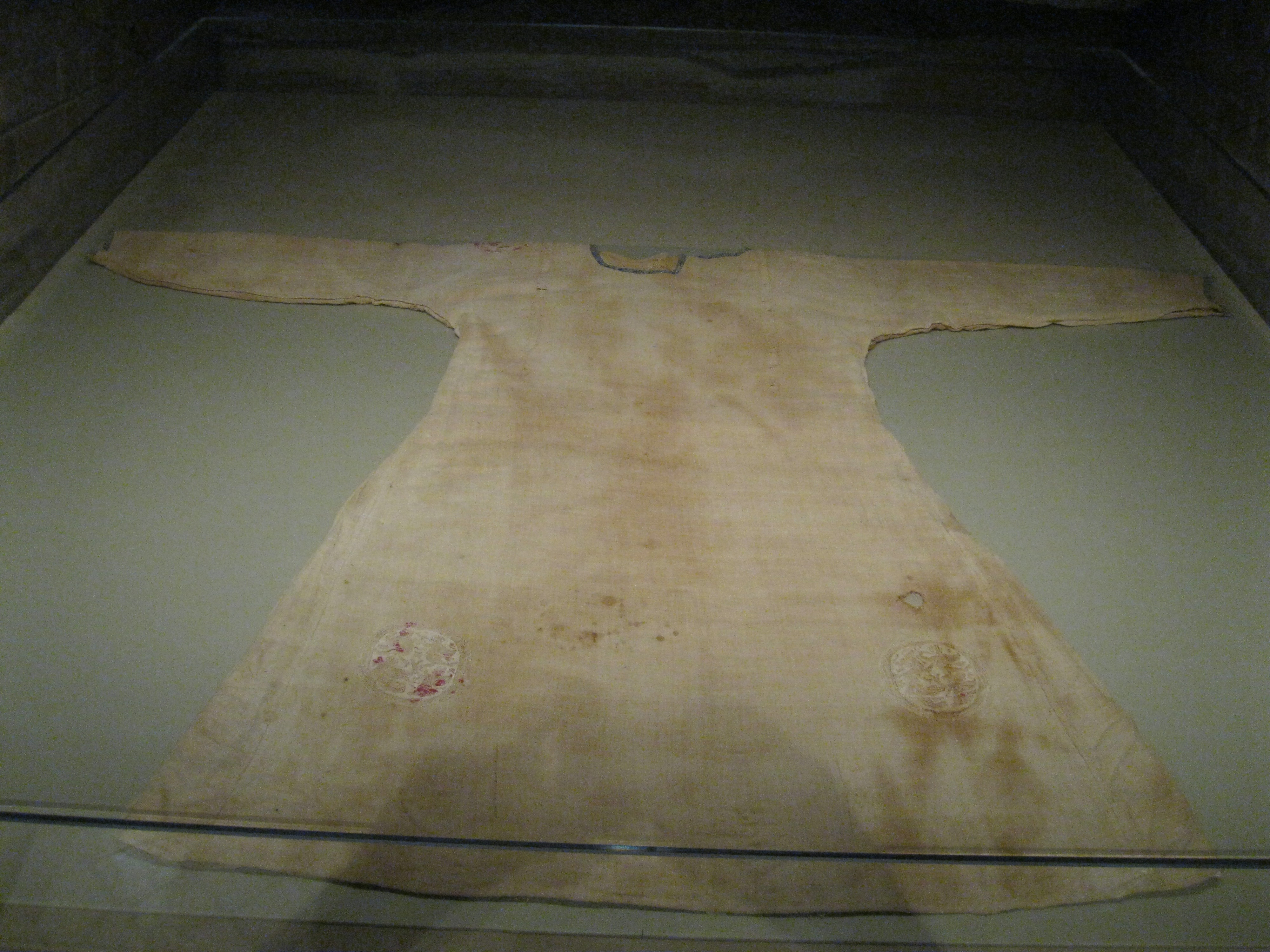
My pattern is based off of the 7th Century tunic in the permanent collection “Under the Stairs” at the Metropolitan Museum of Art in New York City.
Kamision (Tunica) instructions:
Recommended fabric: linen or very light wool
Recommended yardage: 4 yards of 60” wide
First, assess your fabric, and see if you can use this pattern layout, note the positions of the folds. This pattern is not to scale, and the average sized person may not have enough extra fabric on the sides to warrant the inclusion of the gores. This is okay, as they can be cut separately.
A breakdown of the measurements you will need as laid out in the patterns, they DO NOT include seam allowance:
A: Tunica length. Measure from the nape of your neck to where you want the tunic to end.
B: 1/4th Chest measurement + ease. Typically what I do is take a chest measurement, divide it by 2, add 2 inches, and divide again by 2. That is your number.
C: Upper arm length has everything to do with the width of your fabric and not your arm. If you can fit the length of your upper arm (shoulder to elbow) here, that’s awesome, but it’s not necessary, you will want at least to the half-way point between your joints, otherwise your underarm will not fit.
D: ½ Bicep measurement. Remember your fabric is on the fold at the top for your sleeves here, so you don’t want this to be very wide against your body. Tunicae were fitted as dalmaticae were not, so you will want to adjust ease here as necessary.
E: Lower arm length is the difference from where your upper arm length ends to your wrist.
F: ½ Wrist circumference is actually ½ the measurement you get around a closed fist. You want to get your hand into your sleeve, after all.
G: Gore length is the measurement from the top of your hip to the desired hem of the tunic. Now, if you have a fine derriere, so to speak, feel free to elongate that gore to your waist, but the original tunic’s gore comes off the hip.
There’s a variety of formulas out there to make a neckline. I have a small neck at 13”, so my go-to cut is 4” from the center point on each side, with a 1” dip in the back and 3” dip in the front, but a 2” dip in the back and a 4” dip in the front should fit most people. A boatneck, or basically just a slit, is also a common style for this period. The tunica at the Met has a keyhole neckline with the opening on shoulder seam. I’ve done that before as well. I recommend finishing your neckline with bias tape or a narrow hem before moving on.
Before any piecing of the pattern takes place: GET YOUR EMBELLISHMENT DONE. There is no way to apply clavii to a tunica once those side seams are in place. Get any roundels or segmentae you want on as well. It’s just easier to handle at this point.
Follow the diagram on the piecing. If you are going with the smaller gores if you were able to cut it from the folded fabric, follow the illustration at top, if you cut gores from a separate piece, follow the bottom. Apply trim over the seams where the upper sleeve joins the lower sleeve. This is definitely something else you want to do before you sew up the side seams.
Now all that is left is to join the front to the back along the side seams, hem the sleeves and bottom, and finish trims, and you’re done!
Delmatikion (Dalmatica) instructions:
Recommended fabric: Linen, silk, damasks/brocades, light to medium weight wool
Recommended yardage: 5 yards of 60” wide
Think of the Dalmatica as an oversized tunica, but as the tunica can be worn by itself as one layer, the dalmatica is an overtunic only. This is a unisex garment, and sometimes for women you may see it referred to as a “gunna.” Either way, this is where you really get to jazz up your wardrobe. They can be floor length or short enough to show off your tunica embellishments.
Sleeves can be short, long, or extra-wide as was the style in the 11th and 12th centuries when my persona lived. The only real difference is that typically the dalmatica was cut from one piece of fabric, including the skirt width, whereas the tunica had gores. However, gores are still a perfectly period option in the event of a smaller bolt width. Follow the instructions as laid out above for the tunica, and you should be in good shape. As far as embellishments go, the best way to go about this is to follow some period examples. Clavii didn’t seem as popular on dalmaticae as the centuries progressed, and richness was displayed not so much with embroidered bands of trim but rather in the heavy silk damasks and brocades that were in fashion. My drawings including clavii to better illustrate how to embellish.
Note that I included a curve at the edge of the skirt portion in order to better facilitate trim application on the dalmatica’s hem. This is optional, especially if separate gores are chosen, but note that wide trims will require careful piecing and pleating to better conform to the hem.
Just like in the Tunica instructions, remember you NEED to add any embellishment such as clavii and other appliques BEFORE you close the side seams.
Once your garments are completely sewn, then it’s time to go in and add all the really rich goodies to your pieces, such as hundreds of pearls and other gemstones. 🙂
I’m hanging out down in Trimaris for a while to beat the winter up north. All sorts of new wonderful Byzantine and Roman goodies coming soon after the new year!
I can’t tell you how many times I’ve seen people emulating this look from the “Byzantine Fashions” Dover Coloring Book by Tom Tierney and “Ancient Greek, Roman, and Byzantine Costume” by Mary G. Houston.
First of all, I want to say I have no issue with the images presented by Dover. They usually do a good job, but they have a hard time backing up their sources. When asked about that particular clothing style, especially the belt, I had no idea what their source was, and upon asking others, I got a lot of shrugs and odd statements such as, “Oh, the book says it’s a princess/prostitute/ancient Roman goddess.” Which only led to me getting more confused.
I’ve had the Tierney books for a while, both “Byzantine Fashions” coloring book and the paper dolls of Justinian and Theodora, which are adorable. They do provide a pretty solid idea of Byzantine styles based on artistic record. So don’t knock them, but don’t run off with them as a primo source, either.
This particular style intrigues me. Mostly because it’s almost always done with a V-neck. This seems wasteful, especially for the opulent, fabric hoarding Byzantines. So, I ran a brief Google search on “Bamberg textile” and…
The so-called “Bamberger Gunthertuch“, a Byzantine silktapestry depicting a Byzantine emperor on his triumphant return from a campaign. He is crowned, bears the labarum and rides a white horse. Originally identified as Basil II (by A. Grabar), it is now accepted that he represents John I Tzimiskes on his return from the campaign against the Rus’ in Bulgaria. He is flanked by two female tychae, who personify Constantinople’s two demoi, the Blues and the Greens. The one on the right offers [possibly] a crown, and the one on the left a triumphal toupha headdress. The silk was acquired by Gunther, bishop of Bamberg, in 1064-5, and re-discovered on 22 December 1830 in his grave. The silk is now on display in the treasury of the Bamberg Cathedral.
Well, there you have it. They aren’t princesses, they’re political parties.
Now, moving on. What are we looking at here as far as clothing goes? This is 10th Century, so it’s 100 years prior to my period (not that it’s ever really stopped me or anyone else in the SCA about being anachronistic with their anachronism.) And what I see, instead of any sort of fitted short sleeveless tunic, is the trusty stola. A woman’s garment that was somewhat carried over from the Classical period, only cut like a classical tunica, or “Roman Rectangle” as my friends and I like to call it. Here’s a Coptic-Byzantine stola:
You’re looking at an insanely simple garment. Almost tabard-like in nature, with minimal decoration. The ones depicted by the ladies in the textile fragment only have trim on the bottom, and it’s short enough to show off ornately decorated tunicae underneath, which seemed to be a popular look. This would explain the heavily gathered appearance on the Bamberg piece. After trying a stola for myself before, I can see why women would rather opt for the look portrayed in the Dover books, it’s a lot more flattering. Yeesh.
As far as that double hanging belt thing goes…uh…it doesn’t look like anything depicted in the textile at all. The woman to the right is wearing a belt, but that looks more like the end of a buckled belt than any extra ornamentation, and they certainly don’t have the spacing shown in the Dover illustrations. So that’s something that is certainly open to interpretation as far as design goes. I also really like the pink pallas, as I have a pink palla. 😉
It’s hard to say exactly if this was a commonly worn fashion. Much like the sideless surcoat debate, it may have been something only worn for ceremony and therefore depicted in art, or, as is common with Byzantine motifs, it’s hearkening back to the classical period of Rome. Either way, I hope that women looking for more information on this dress style have at least been able to get what they’re looking for from this little blurb. 🙂
Anyways, the boozes did well at Great Northeastern War. My conditum paradoxum and rose-lavender cordial were paneled and both scored relatively well for my first foray into the guild scene. My mead and cordial both one best in their division. There was only one cordial, but…hey, there were 8 meads. That counts for something.
Nobody showed up to my Roman garb class except for my friend Elinor Strangewayes (see also: woman who makes Roman phallus beads,) but my Varangian Guard class had a good group, even though I didn’t prep a good lecture, we sat there and talked for an hour and I spewed what I could from the top of my head. They loved the extensive biblio I put onto my handout. I think I will be posting that in the future.
The Byzantine garb page is almost finished, I hope to get that up in a day or so. I basically copy-pasta’d my handout, but I’ll also be adding more stuff. Since my persona is 11th Century, I need to focus on finding more information about that more rather than the generic “Throw clavii on a tunica and call it Byzantine” look. At least there’s lots of fun vocabulary to learn, right? @_@
I am also going to be playing with some Norman garb for upcoming events this fall and winter. The boyfriend is Norman, and technically so is half of my persona, so I get to wear Western European garb for the first time. Ever. I don’t count my Viking, that’s Northern. 😛
The Muscat is in the fridge. The Conditum Paradoxum is upright and settling out. (It clarified while cellared.) I will need to re-rack it before Great Northeastern War this weekend. I am EXTREMELY excited about my first chance to panel in the East Kingdom Brewer’s Guild. I’ve been dabbling with my local guild: The Smokingbridge Guild of Libation Brewers, for a while now, but I never thought to bring it to the Kingdom level until I got these beverages done. I will be paneling my Conditum Paradoxum along side a short mead, rose and lavender cordial, and my pomegranate balsamic sekanjabin if there are enough slots open for all 4. I’d like to thank Mistress Bess Darnley for taking a moment to look over my documentation and providing feedback.
The next panel I’ll probably make will be at Birka in January, and these shinies will be good to go:
YES! The Rosatum and Retsina are done and bottled and delicious! I can’t wait til these age. They’re going to be remarkable.
This is a great post from another blog that I follow. It shows styles of Byzantine swords, which is great when I’m “furniture shopping” for my SCA weapons. Check it out, Byzanteam!
You heard me. I am interrupting this blog to talk about dangly bits. Appendages. Wee-wees, dangit! It’s perfectly okay, you see, because this is perfectly ROMAN.
A lot of information is surfacing lately on the amazing shiny Roman phallus jewelry, and I’m getting pinged on Facebook and email about it often, and I have been asked quite a bit about it. Well, here you go.
Everything you ever wanted to know about the Phallus in Roman culture!*
*but were afraid to ask! (Abridged. There really is a ton of stuff.)
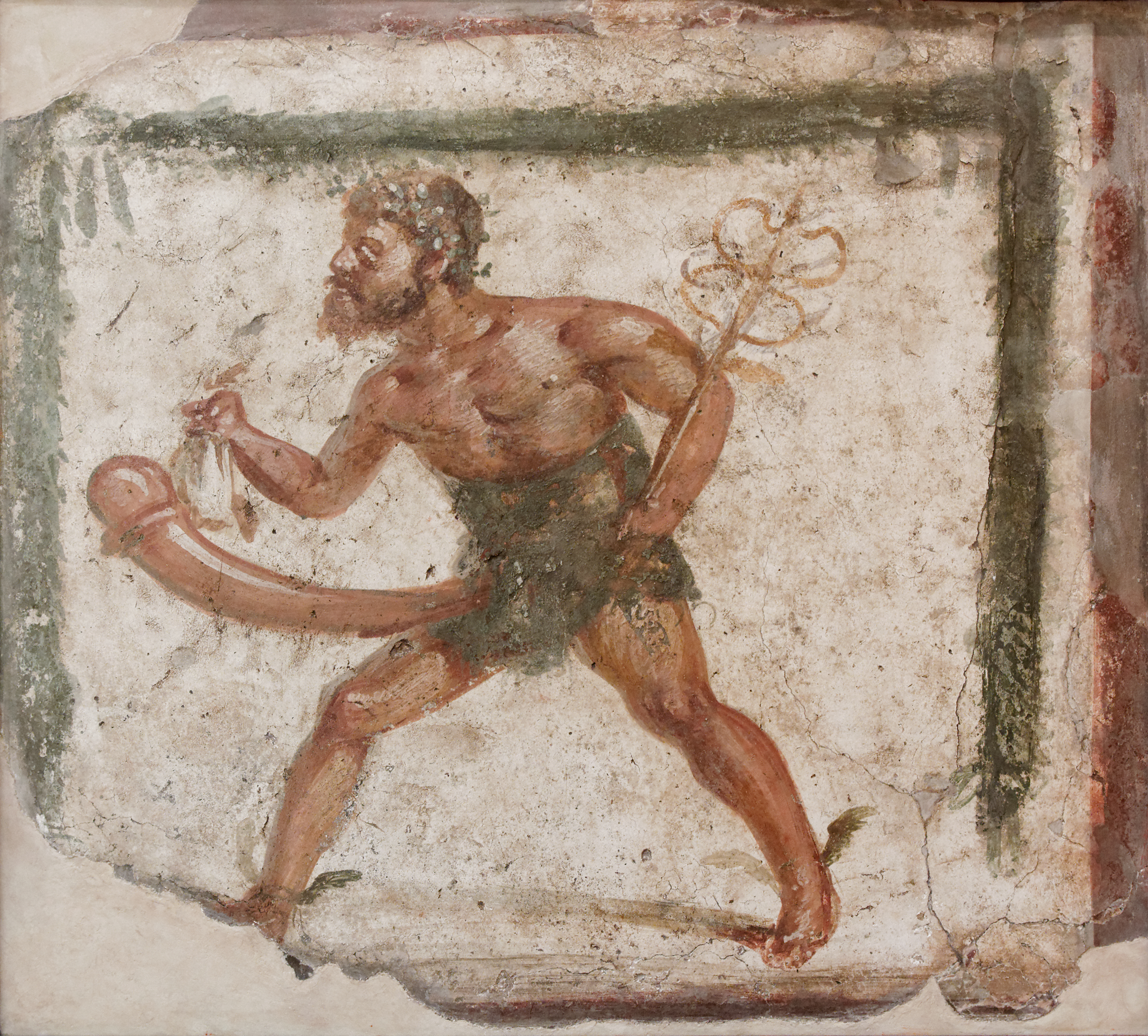
Well, first, I had to gauge my approach to this post. I mean we’re talking about PENISES here. Yes, I said it, penis. If that offends you, well, you may need to re-think reading this post, because it’s only going to get better. Anyways, I figured, well, we’re talking about something seriously historical, I could be dry and historical but…no. It’s hard enough for anyone in this day and age to take private bits seriously, and frankly, they didn’t take them seriously in Ancient Rome either. There is more penis graffiti in Pompeii than in a boy’s middle school bathroom, heck, even the first episode of HBO’s Rome shows penis graffiti. And if the graffiti wasn’t enough, well, there’s always this guy:
Well, that should have culled the prudes out of here. Hello, filthy minded history types! Welcome to Ancient Rome. Where pornography was on every street corner! If the first thing out of your mouth at this point is, “Oh God, think of the children!” Please leave now. If the first thought in your mind while looking at the above fresco is, “Why is Mercury exhibiting the…traits…of Priapus?” Then you’re in the right place. Let’s provide a bit of a background.
Priapus is a minor Greco-Roman god of fertility, as if you couldn’t guess. He also had something to do with fruits and livestock (twigs and berries?) This above fresco is from Pompeii, and well as this fella:
Ladies…
Now, there is a great deal going on here symbolically. The first I notice is the Phrygian cap on Priapus’ noggin. The best analysis I can give while I sit here sipping tea and giggling at pornographic frescoes is that this particular painting is from the House of the Vettii: two freedmen who made themselves a fortune in the merchant business, which I believe could have been imports. Note I said “freedmen.” These brothers were former slaves. In Rome, slavery was not a life sentence, in fact, slaves were often paid, and were able to buy their freedom at a certain age. Most were not kept over the age of 30. Pompeii was a resort town, sort of the Hamptons of its time, and these homes were worth quite a bit. My own conjecture about this cap is that it symbolizes the freedom of the Vettii, as the Phrygian cap was often presented to slaves upon their emancipation. But still…the penis, or the fact that the previous image is of Mercury. Let’s see what we can find.
Returning to Priapus, I hit the Wikipedia entry first for some fast facts. They’re also a good place to start for secondary sources. Skimming the article already provides a great deal of information, including his appearances in popular myths and theatrical performances, and role as a god. Toward the bottom though, is where I found the gold: Patron god of merchant sailing. Well, that would explain why the Vettii liked him so much. Right? Maybe? OMG wang?
There’s much more than meets the eye here, I think. What does a rustic lesser god with a Viagra addiction have to do with merchant sailing?
The Phallus and Navigation
In the International Journal of Nautical Archaeology September 2002 issue, there is an article entitled, “A terracotta phallus from Pisa Ship E: more evidence for the Priapus deity as protector of Greek and Roman navigators” by Harry R. Nielson III. Nielson, a professor at Florida State University, writes that the phallus is associated with “possession and territorial demarcation” in many cultures. This attributes to Priapus’ as a navigational deity. This is not the first instance in which phallic figures have been found aboard ships.
Returning to a primary source, the Satyricon by Petronius also bears mention to Priapus being present at a shipwreck. Although the Satyricon is a work of prose fiction and a comedy in which the instance of the shipwreck appears to be in parody of epic poetry, the fact that this was included in the body of work notes the connection of this deity to navigation by the Romans. There seems to be no shortage of archaeological evidence suggesting that vessels and ports displayed a significant amount of phallic imagery, including statues and frescoes of Priapus. I cannot seem to locate any other particular source without sitting and doing hard research through article databases and libraries, and since this is summer vacation and most academic libraries are closed or only open part-time, getting in to do the research I need just isn’t available. I wouldn’t typically rely on one secondary source for information, but the idea of the penis being regarded as a territorial symbol makes perfect sense from an anthropological standpoint, or really to any women who has ever dated jocks.
Another hypothesis that immediately comes to mind (again, this is my brain working, not actual research) is the pointing of a compass. Did the Ancient Romans have a compass? Unfortunately not, but they were formidable sailors with the ability to chart sea routes using the stars and landmarks. Any sort of a “heading” could be looked upon as an erect phallus. I have now completely ruined navigation for everyone with a dirty mind. The next time you’re on an airplane or a boat, and someone says, “heading,” you will think of some hairy old god with a huge schlong. You’re welcome.
Apparently it was common in Rome to have signs of Priapus with a message as he…pointed…in the direction of a landmark. In the case of this excerpt from the Priapeia, which is a collection of such sign verbiage, he points out a fountain:
‘Falce minax et parte tui maiore, Priape, ad fontem, quaeso, dic mihi qua sit iter.’
Priapus, terrific with thy sickle and thy greater part, tell me, prithee, which is the way to the fountain?
When in Rome, if you get lost, ask the guy with the huge erection.
Returning to the first image of Priapus sharing traits with Hermes/Mercury (winged feet and a caduceus staff) this immediately perplexed me, but I figure it had to do with a particular myth or characteristic of Mercury that I possible have overlooked in my studies. Priapus is almost always attributed to Dionysus/Bacchus: The god of wine and partying. Makes sense, right? Some believed he was the son of Dionysus and Aphrodite/Venus, so adding sex into the mix of booze and rock-n-roll would of course create the ultimate phallus god. But Mercury? People often overlook Mercury as being a phallic god, because he’s always depicted as the messenger. This is probably due to Victorian scholars hiding anything that has to do with sex. In fact, Hermes, the Greek counterpart, is often depicted with a phallus come to find out, and was the patron god of fertility during the archaic period of Greece. Eventually, Priapus broke off from this as the pantheon continued to grow. And despite similarities between the Greek and Roman pantheon, worship was very different. It was like a bad game of telephone, really. So a Roman depiction of Priapus with traits of Mercury or vice versa would make a lot of sense. Mercury also guarded travelers and merchants, so there’s a great deal of overlap, here. The image on the wall may not be Priapus at all, it could simply be a very happy Mercury painted in the home of the Vettii Brothers to protect their sea-going merchant business. Fair enough.
Jewelry
Phallic imagery evidently played a huge part in navigation and direction, as well as the protection of travelers, which is probably why these little suckers were all the rage in the First Century:
That is, indeed, a golden cock n’ balls, folks.
This has been getting a lot of press as of late because the museum in possession of this artifact is beginning to sell replicas, and I want one. For strictly Roman re-creation and re-enactment purposes only. I swear. (I also have a couple of medieval phallus replicas from Billy and Charlie at Pennsic, but I assure you that it wasn’t viewed as a good luck charm or a piece of navigational equipment in the Middle Ages. What can I say, I collect…charms. OH COME ON THEY ARE FUNNY!)
This piece is drawing a lot of attention, and it should, I mean, it’s pretty remarkably detailed and made of gold, and I’ve seen more than one ornamental dong in my day. No, really, these were REALLY COMMON among the Roman people, so common, that you can buy actual artifacts on eBay where I stumbled upon these remarkable doo-dads for the first time back when I was a wee, innocent Anna. If they are plentiful to sell on eBay for Wal-Mart artifact prices, then they were literally all over the place. But why? To our prude modern society the idea of wearing something like that is totally obscene. In fact, it could probably land someone in jail here in the states if someone’s very conservative grandmother mistook it for a cross and got the shock of her life. In fact, I would BANK on it, which is why I’m surprised they are selling replicas. Apparently the Jolly Old Mother Country isn’t as staunch as their screwy offspring.
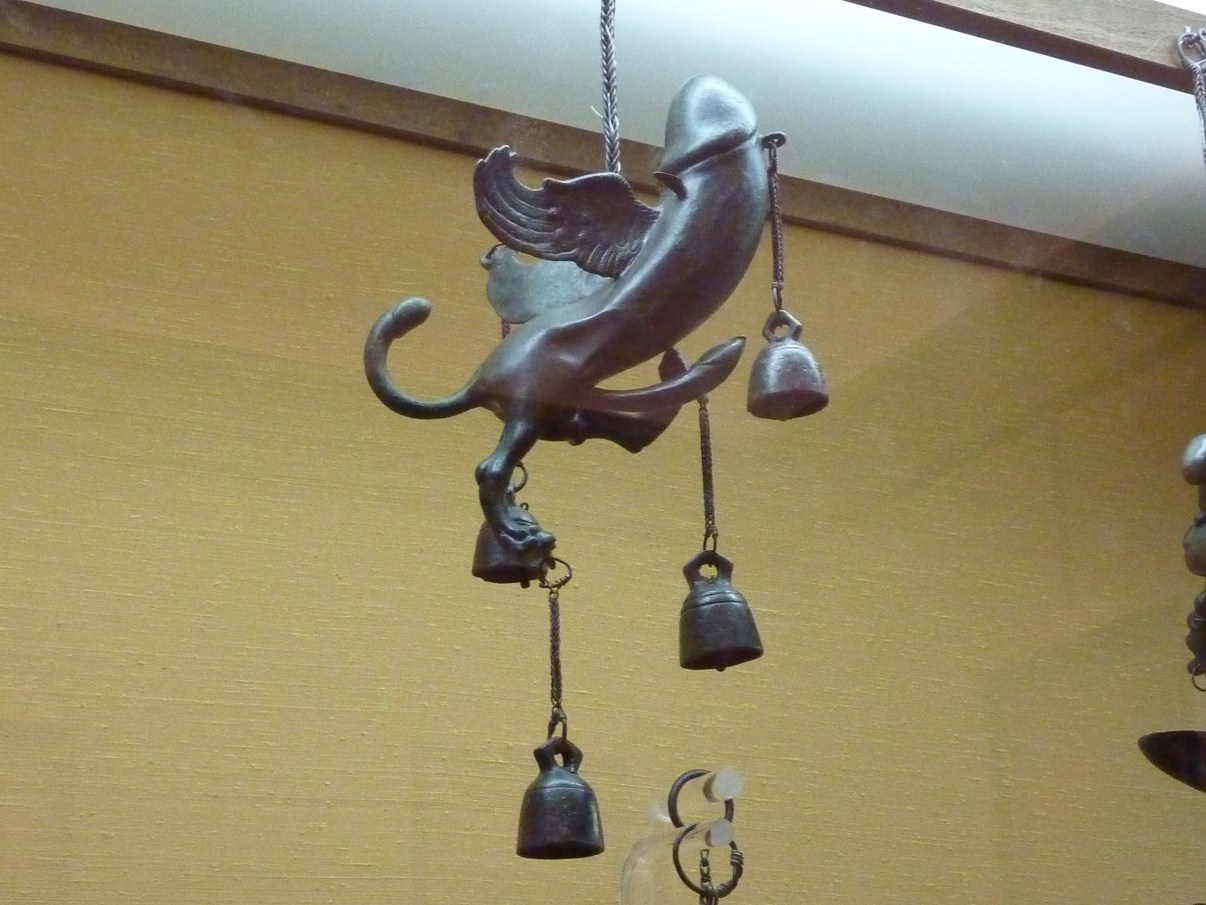
Either way, you’re looking as something that was a common as wearing a wrist watch, er…carrying a smartphone is today. This type of amulet is called a fascinus, and was essentially the embodiment of the divine phallus. You can easily see the word “fascinate” in there, only in Latin, it’s pronounced quite differently (Fahs-kee-noos.) Etymologically, to be “fascinated” means that you were put under a spell. This makes sense as it was considered a protective amulet. Much like the blue glass “evil eye” amulets you see today from the Mediterranean (which was also popular during Antiquity!) the phallus warded off evil. I certainly like this wind chime (tintinabulum, a wonderful Latin onomatopoeia!)
Now THIS is a conversation piece!
The majority of the finds of jewelry seem to be along the frontiers and roads of the Roman Empire, leading me to believe that it was something very popular with the legions. I’m sure if you ask any manly man today if they would wear a bronze penis around their neck, their answers could be mixed, but as we already determined, to the Romans, the phallus wasn’t just about impressing your friends. It was a charm for travel and navigation, and maybe fertility and general good luck. Knowing this, it would make perfect sense for Roman soldiers to wear one. It would protect the wearer and keep them headed in the right direction, since there were no compasses, only landmarks, the stars, and apparently horny gods.
But the buck doesn’t stop there, oh no, they gave these dangly bits to children. Yes, you read that correctly, phallus amulets were given to children after birth as a way to ward off evil spirits, and ensure they would grow to be strong and virile. I’m not sure if women got the same amulet, but I have yet to find a vagina amulet as a counterpoint. (If you find one, OMG show me!) Rome was a pretty chauvinistic society, not as much as the Greeks who treated their women like absolute dirt, the Romans just treated them as 2nd class citizens, so it’s doubtful that women would have been given the same treatment.
Public Religion
The more I dig, the more I find more really interesting stuff. The Vestal Virgins (cue Lighter Shade of Pale, it gets in my head every time.) tended the cult of the Phallus. Evidently, the phallus was a symbol of the safety of the state. By placing a phallus in the hearth, it embodied masculine power hidden within a female duty. Feminists will read this and cry. There were also public festivals that celebrated a lesser god known as Liber, who was a predecessor to the imported Dionysus, in which the phallus was represented.
Augustine of Hippo writes of this in his City of God, as described by the now-lost works of Varro:
Varro says that certain rites of Liber were celebrated in Italy which were of such unrestrained wickedness that the shameful parts of the male were worshipped at crossroads in his honour. … For, during the days of the festival of Liber, this obscene member, placed on a little trolley, was first exhibited with great honour at the crossroads in the countryside, and then conveyed into the city itself. … In this way, it seems, the god Liber was to be propitiated, in order to secure the growth of seeds and to repel enchantment (fascinatio) from the fields.
I cringe at this as a historian, mostly because Augustine himself was quite a manwhore (yes, that is a technical term) before he “found God.” So this point of view seems extremely hypocritical to me that he would cast this behavior as being so wicked. With the spread of Christianity came the demise of the cult of the phallus, and most information was lost, or covered up, by angry Christian philosophers such as Augustine. Could you imagine if Thomas Aquinas got his hands on this information? UGH! I am not insinuating any hate on the Christian faith, I am simply stating that they are mostly responsible for the prude ways of modern society. Contrary to popular belief, Christianity is what saved a great deal of Roman manuscripts by allowing them to be copied throughout the ages. Their moral views were just quite different than than of the pagan Romans, which is probably why these fun little novelties did not survive into the Byzantine Empire. In fact, it appears that the Byzantines may have covered up male genitalia in earlier works of art.
I could probably spend days of research on this and write a significant paper. I appear to really just be scratching the surface, but I wanted to give a cursory look on the commonality of the phallus pendant. So there you have it. Be it fertility, luck, navigation, direction, protection of merchants and babies, the phallus in Ancient Rome was hardly pornographic, it was a part of life. Like I’ve had to tell folks before when it comes to studying some of the finer…nuances of ancient culture is that you need to throw modern views of sexuality to the wind. They did not think like us, they did not act like us. They had a completely open view of sexuality that most people in modern society cannot comprehend, so the image of a phallus was not obscene, it was simply “there.” It was part of their culture and their day-to-day lives. That didn’t stop them from making plenty of sick jokes, much like we do today.
“Your nose is so long, and your dick is so big that you can smell it when you get an erection.” – Martial
Bibliography
Nielson III, Harry R. “A terracotta phallus from Pisa Ship E: more evidence for the Priapus deity as protector of Greek and Roman navigators,” The International Journal of Nautical Archaeology, Vol. 31, Issue 1. Pages 248-253
Csabo, Eric. “Riding the Phallus for Dionysus: Iconology, Ritual, and Gender-Role De/Construction,” Phoenix , Vol. 51, No. 3/4 (Autumn – Winter, 1997), pp. 253-295





 Anna's New Rome
You must be logged in to post a comment.