Compleat Anachronist!

Have you ever wanted some of my blatherings in printed form to have and to hold forever?

Well soon you CAN! I contacted Compleat Anachronist, the SCA-wide A&S publication that comes out quarterly. http://www.sca.org/ca/index.html It covers all kinds of awesome topics for SCAdians that want to up their game, and for me, the issue will be on…surprise, Roman and Byzantine clothing. I am making it as comprehensive as possible, however, so everything a SCAdian needs to know about dressing in bed sheets is covered. 😉

Oh yeah, I’ll get that stuff up soon on Byzantine dress. I swears.


My name is Angela…

… some people call me Anna. I have an unhealthy obsession with Ancient Rome and Byzantium. I spend time I need to be doing Latin homework cutting intricate felt appliques for a tunic for one of my best friends fighting in Crown, and not even for me as consort. I’m perfectly okay with this. My boyfriend, some Norman guy, spent his day pounding out fake coins and brewing beer. Welcome to the SCA, make sure your tray tables are in their upright and locked position, because its going to be a wild ride.

Half of an Order of the Tyger’s Combattant medallion.

IN VINO VERITAS V. “HAAAAAAAAAADRIAN!”

That is probably the worst movie/history pun crossover in the entire internets. Anyways, we have wine!

First you gotta sanitize those bottles. We may be making Roman wine, but we don’t need Roman germs.

I use C-Brite sanitizer.

Then you make your boyfriend put the carboy on the counter for you.

It’s so clear, you can see from here to Guinness. BRILLIANT!

Once you siphen into the bottling bucket (best money ever spent, ever deal with bottling out of a carboy? Ung.) separate off the small batches of infused wines. Here is the Retsina with pieces of pine resin in the bottom, and the Rhosatum, with dried roses in a bag infusing in the pickle jar. These should be bottled by the end of the month. Pliny says to leave the roses in there for 3 months, but I’m assuming he meant fresh. I’m using dried, so I’d rather monitor what this is going to do and the flavor I’m going to get before creating a mess.

Retsina (resin) and Rhosatum (rose) wines.

I also separated my portion off for the Conditum Paradoxum, the spiced wine from Apicius. After gathering my ingredients, it all went into the pot for an hour on low heat to steep. The pine resin melted fast, which got me worried, but it was fine.


You can see the odd mix of ingredients here: dates, melting resin, bay leaf, saffron, black pepper, honey, and I threw in a cinnamon stick for fun and profit. And my stove is filthy. Welcome to brewing.

Once that was infused with the rest of the wine, it was strained and bottled. Here is the Conditum in the bottles next to the unaltered muscat wine I made.

Conditum on the left, plain wine on the right. You can see how the spices clouded the wine.

So, being the brave soul I am, I tried the Conditum in the period style, using warm saltwater to dilute it, as the straight liquor is extremely sweet.

The dilution cleared the wine, and brought out the infused flavors.

From Familia Annae to yours, EU!

IN VINO VERITAS IV

Bottling and infusing the wine today! Excited! Pictures to follow in tonight’s post.

In the end, I will have the following:
2 gallons of “Ancient White” Muscat wine.
1 gallon of Conditum Paradoxum (spiced wine from Apicius.)
1 gallon of Rhosatum (rose wine from Pliny the Elder.)
1 gallon of Retsina (resined wine.)

I’ve found a couple different redactions of the Conditum Paradoxum. I have one written down in my brewing journal (this is a must-have for anyone who brews as much as I do. I conjure up recipes and write them in, and track my progress on existing projects) but I found a different approach online I may go with instead. The basis of the drink is that you take a base wine, Apicius doesn’t say what color though both reds and whites were widely consumed by the Romans, and you make a must of honey, saffron, mastic, bay leaf, black pepper and dates. I don’t have any mastic, so I’m subbing in cinnamon. Plus, with my Retsina, I didn’t want to overdo it with that flavor. I *DO* have plenty of pine resin to work with, so that is still an option.

The rhosatum is getting treated exactly as Pliny says: put rose petals in a bag, put it in the must, close the sucker up and then let it sit for 3 months. I’m assuming he means fresh petals, and I’m using dried, so I’m going to be monitoring the color of the liquor and making sure nothing goes funky in there. If I stop the infusion early, I stop it early. No big.

The Retsina doesn’t have a clear cut recipe. I’m more or less trying to re-create a flavor profile than an actual recipe. Originally, Greek and Roman wines got the resin flavor from the use of pine resin as a sealant on the amphorae. Being that I don’t have an amphora, (I’ve looked, they’re expensive to get made) I’m cheating and tossing an ounce of resin in the wine and letting it age a month. If this works out, I’ll bottle the wine and seal the top of the bottles with resin like wax as a nice touch.

I’m going to let the wines bottle age a minimum of 3 months, so my first bottles should be ready by Pennsic War, at least of the Conditum Paradoxum (which I plan to panel with hot seawater to dilute it with!)

More updates today as it comes, live, from Black Dolphin Brewing!


In Vino Veritas Part III, and Artisanal Swapage.

Racked the wine to the secondary today. It’s fermenting like a madwoman. I probably could have let it go longer, but the boy needed the larger carboy for his beer that he’s working on today. Either way, I plan to leave it in this carboy now for at least a month before the clarifying process. I picked up another 1 gallon jug today as well, now I have 2, which will be important for when I do my separate infusions of the rose and resin. As of this point, I’m not thinking they will be ready for paneling at War of the Roses (Memorial Day weekend) so at the earliest I should have a drinkable product by Pennsic, and especially good next year, as I intend to age as much as possible. It is wine after all. Though the Romans did drink a lot of young wine. Mostly because it was the primary beverage of choice, and though there were period winos (Pliny most certainly one of them) that did enjoy ages wines, there is no harm in younger beverages.

I also signed up for the Nobelese Largesse swap today via Facebook. It’s a Knowne-World wide artisanal swap that requires documentation. I cannot post what I am doing or who I have or pictures until the gift is sent for obvious reasons, but I am looking forward to participating in this one. 🙂

I am also involved in the East Kingdom Artisanal Swap for my second round. That gift has been finalized, and I am working on getting everything together to complete it. My previous swap gift went to Konstantia Kaloethina in Calontir, the founder of the NL swap, and I made for her a Byzantine Superhumeral out of shot purple silk, with some amethyst and pearl beadwork. I left it plain since we had discussed prior to me even having her as a swap recipient that she wanted one to adorn with her award medallions, but did not know how to sew one for herself.

Konstantia's Superhumeral

I received in the swap a lovely wooden chest with my arms on it, and a couple of brass and bronze medallions from Sir Yessunge Altan, I was blown away.

Wooden Chest from Sir Yessunge.Medallions that came in the box.

You can see the type of work that goes into these swaps, this is why I’m so excited for NL, being limited to 40 participants, and worldwide. I do love a challenge!

Roman pork, success!

Despite 3-4ft snow drifts, unplowed roads, and a treacherous walk across my neighborhood to find a ride in a 4×4 Jeep to the event, I successfully cooked and fed my version of Minutal Ex Praecoquis from Apicius! The dish won best meat at Feast of the Gaunt Days, and my prize was a dried pig’s ear. LOL.

Here’s some pics of the process. The recipe is at this post here.

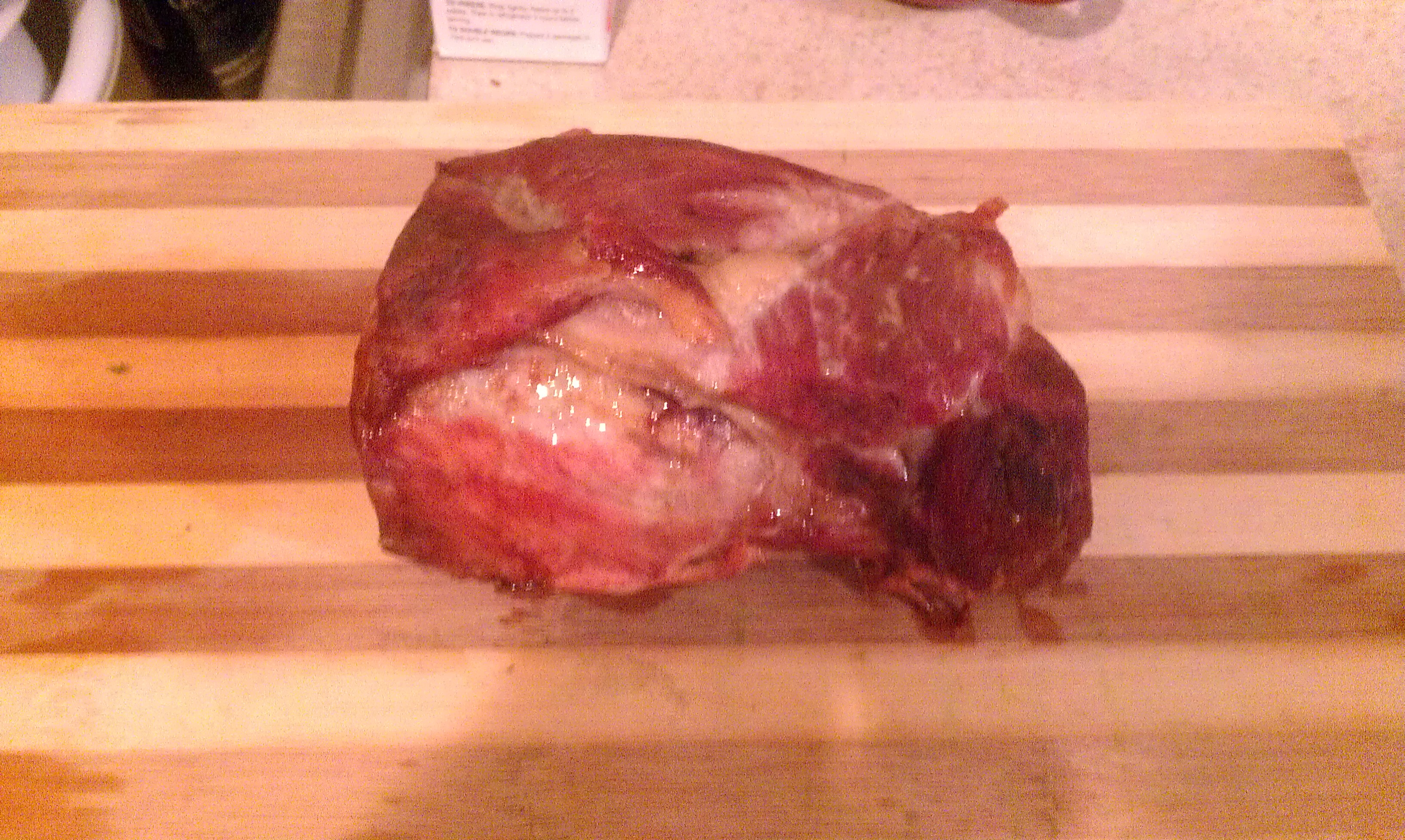
Pork roast, after being roasted.

Cubed. Gods, I love my new kitchen knives. It’s nice not flying at Christmastime.

Passum: A white wine and honey reduction sauce. The honey surprisingly mellowed the flavor of the moscato.

Cooking the pork with the broth ingredients that included scallions, wine, oil, and the Roman staple: fish sauce. When this started cooking, the aroma reminded me of Asian cooking, like a Wonton soup.

The sauce contents: aromatic spices, more fish sauce, the passum, vinegar, and honey. When this boiled, the house went from aromatic to, “What IS that vile smell?!” Oy, too much fish sauce! But it mellowed!

The finished product with the sauce, fruit, and panko added to the casserole.  I used A LOT of panko to bind it together, but that could be adjusted depending on how soupy one would want it.

The flavor at first was very salty. I thought I had borked it for good, but, the half hour drive to the site and some time on the chafing dish helped the flavors meld, resulting in quite a tasty meal! I got many compliments, including some from some well seasoned medieval cooks who asked for the recipe. They were quite surprised to find out this was my first attempt!

I’ll be trying this again when I have access to fresh fruits come the summer. It will provide a completely different experience, I’m sure.

So I’m cookin’ sumthin.

I’m not a cook. I have some knowledge of how a stove and microwave works and therefore have the ability to feed myself. Sometimes, I can be rather gourmet, but usually it’s just grilled cheese and canned soup.

Welp, this weekend in my barony, we are having a cooking event called Feast of the Gaunt Days, based on food that would have been made during the fallow months. Rome wasn’t really a victim of the seasons as much as the rest of Europe was, but, they still had to make substitutions when foods were out of season, such as fruits. I have no idea why I chose this recipe other than it sounded tasty, but, it did require seasonal adaptations. Dried fruits that had to be reconstituted, for example, rather than fresh. Scallions instead of shallots, as the period term is interchangeable as they were easier to find.

The cooking begins tomorrow night with the pork, but here is my redaction thus far. Pics will be coming as I finish this project:

Minutal ex Praecoquis” from Apicius’ De Re Coquinaria
A Roman Fruit and Pork Fricassee
attempted so boldly by Kyria Anna Dokeianina Syrakousina for Feast of the Gaunt Days
February 10, 2013

Original Recipe

Minutal ex praecoquis: adicies in caccabum oleum, liquamen, vinum, concides cepam ascaloniam aridam, spatulam porcinam coctam tessellatim concides. his omnibus coctis teres piper, cuminum, mentam siccam, anethum, suffundis mel, liquamen, passum, acetum modice, ius de suo sibi, temperabis, praecoqua enucleata mittis, facies ut ferveant, donec percoquantur. tractam confringes, ex ea obligas. piper aspargis et inferes.

Translation: In a cooking pot, place olive oil, liquamen, wine, dry shallots, chopped, and a cooked leg of pork, cubed. When these are cooked, grind [together] pepper, cumin, dried mint and aniseed. Moisten with honey, liquamen, passum, a little vinegar and some of the cooking stock; mix thoroughly. Add the pitted fruits and bring to a boil; cook until they are tender. Break pastry into the dish to thicken, season with pepper and serve.

My redaction, partially based on the one listed at Celtnet.com

2.5lb Pork Roast, cooked and cubed (I rubbed it with sea salt before roasting for 3 hours at 300*F. I checked the meat constantly with a digital thermometer until an internal temp of 170F was achieved.)
4 tbsp olive oil
4 tbsp Thai fish sauce (Nam-pla) as a substitute for garum/liquamen
14oz pork or chicken stock
4oz moscato wine
3oz scallions, minced

For the Sauce:
generous pinch of black pepper
generous pinch of ground cumin
generous pinch of dried mint
pinch of ground aniseed
2 tbsp honey
8 Nam-pla
8 tbsp passum (Moscato wine and honey reduction)
2 tsp white wine vinegar
4oz pork cooking liquid
10 dried apricots, 10 dried dates, 10 dried figs, reconstituted in water, and quartered
Plain Panko crumbs to thicken

Combine pork, olive oil, nam-pla, stock, wine and scallions in a casserole dish. Transfer to an oven pre-heated to 170°C (330°F) and bake for 60 minutes, adding stock as needed. In the meantime prepare the sauce. Pound together the black pepper, cumin, mint and aniseed in a mortar then work in the honey, nam-pla, passum and white wine vinegar. Pour into a pan, add 4oz liquid from the casserole and bring to a boil. Add to the casserole for the final 15 minutes of cooking. Five minutes before you are ready to serve, add the fruits to the casserole and thicken with Panko.