There’s many jokes to be made about marriage here, so I’m going to ask y’all to sit down about that.
But, in short, in the last year, I’ve started the process of making my late husband “Larger than Life” in the SCA (I mean, aside from dragging him for filth with his hoarding, I guess), and wanted to start a sort of ongoing A&S project on Folk Saints.
After being poked and prodded by local friends to go ahead and make this so, especially since I creeped nobody out on social media by pouring him a pint of Guinness or Dr. Pepper, there is now a website devoted entirely to the Cult of St. Jeff the Moneyer. We already have some traction, even with folks that did not know him, and so far I’m very pleased at how this is being received.
I’m sure there is going to be a corner of the population that is very not-okay with this, and that is your choice. The veneration of folk saints is incredibly period, and honestly this is a practice I think that the SCA could have a lot of fun with. Obviously I’m still working out details, this is a living project, not a one-and-done deal. So anticipate changes and updates overtime as more people become involved with this “cult”.
I’m excited that Late Antiquity has finally been noticed by the SCA. Well, I think more than likely a post by the wonderful Ratna Drost on Facebook is what was noticed, but as somebody working on my PhD specifically in Late Antiquity (yes, not middle Byzantium, look, there’s a story here and it requires booze) I was happy to help to the best of my limited availability to help parse this pattern.
The tunica strictoria appears to be a relatively new-ish term for the long sleeve tunics worn in the 4th-6th Centuries during the waning days of the Western Roman Empire. It wasn’t everybody’s fashion, but it shows up frequently in some visual sources.
A lot of folks bring up the photo taken by Amy E. Place in her Doctoral Dissertation, “Fashioning Identity in the Late Roman and Late Antique World: The Case of North Africa”, of the Personification of July. In this example, July is wearing a dalmatica over the tight-sleeved tunica strictoria, but you see very little detail as to how these tunics were patterned. And the problem is that we have more than one way to skin a cat here.
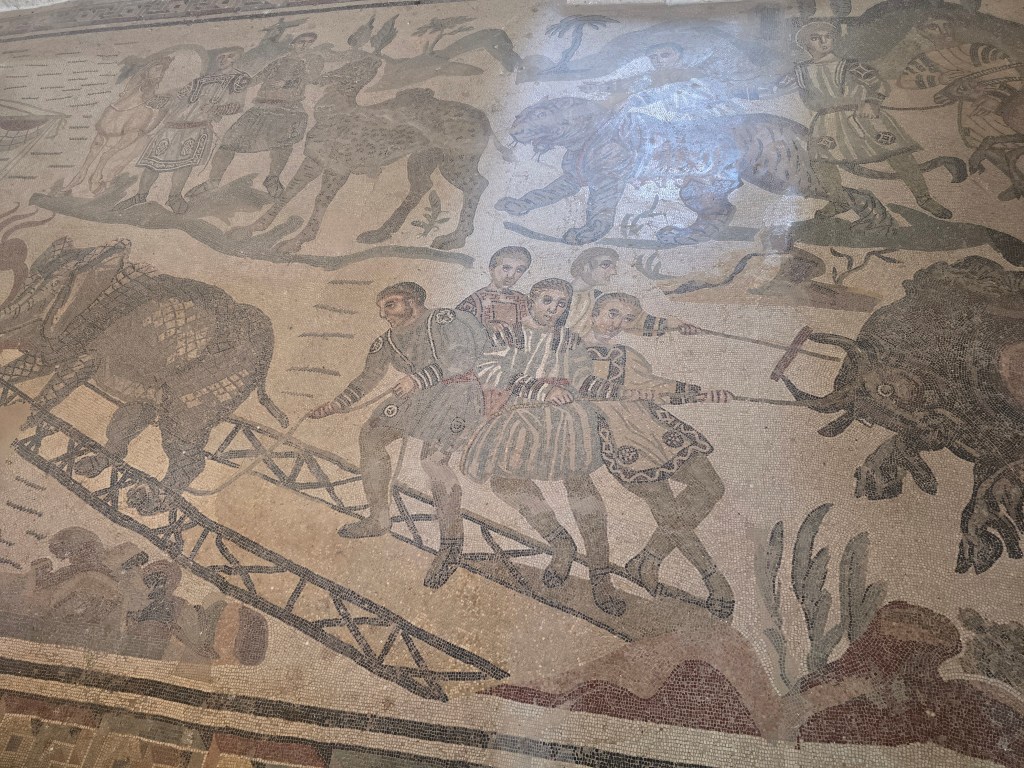
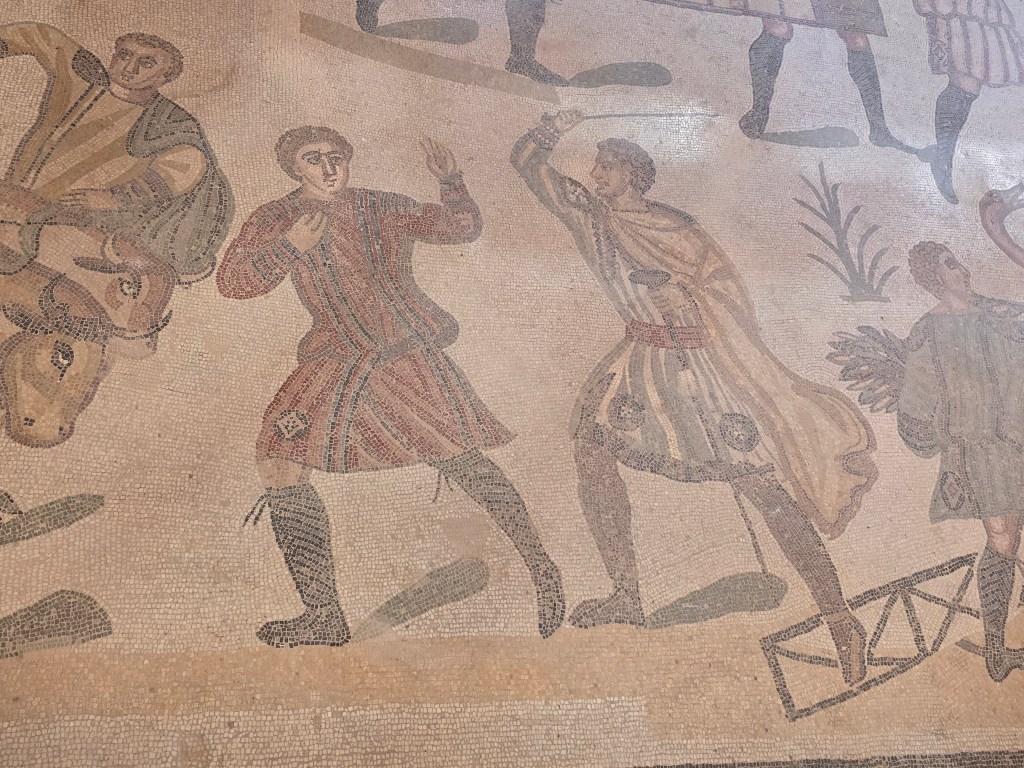
For the most part, a strictoria has tight sleeves. That appears to be the ONLY qualifier regardless of body width or slits beneath the arms to allow for unrestricted movement. Here are some photos I took at the Villa Romana del Casale in Sicily this summer. Mostly of men’s dress. These mosaics date to the 5th Century:
The male figures in this collection are clearly wearing strictoriae, yet the women and the high priest are clearly wearing dalmaticae with what could be strictoriae beneath. This is however, Sicilian fashion, not Egyptian, not Tunisian, not Levantine. And we need to continue to push that Rome, especially Late Rome, was never a monolith, however it’s clear these garments were very full and wide-bodied, as seen here in this image from the Hall of the Small Hunt at the Villa, versus the Ambulatory of the Great Hunt, which shows the men belted. (I will be discussing the variances in detail in my dissertation and will be happy to teach a class on this AFTER I graduate. Please respect my time and research embargo while I complete this endeavor.)
I do want to point out that it is very common in SCA circles to refer to this style as “Coptic” tunics, however this art is from Sicily, and we have seen a variety of examples from beyond Egypt. “Coptic” itself has a very specific cultural meaning for Egypt, so I advise that we begin moving away from this descriptor when discussing Late Antique dress at large.
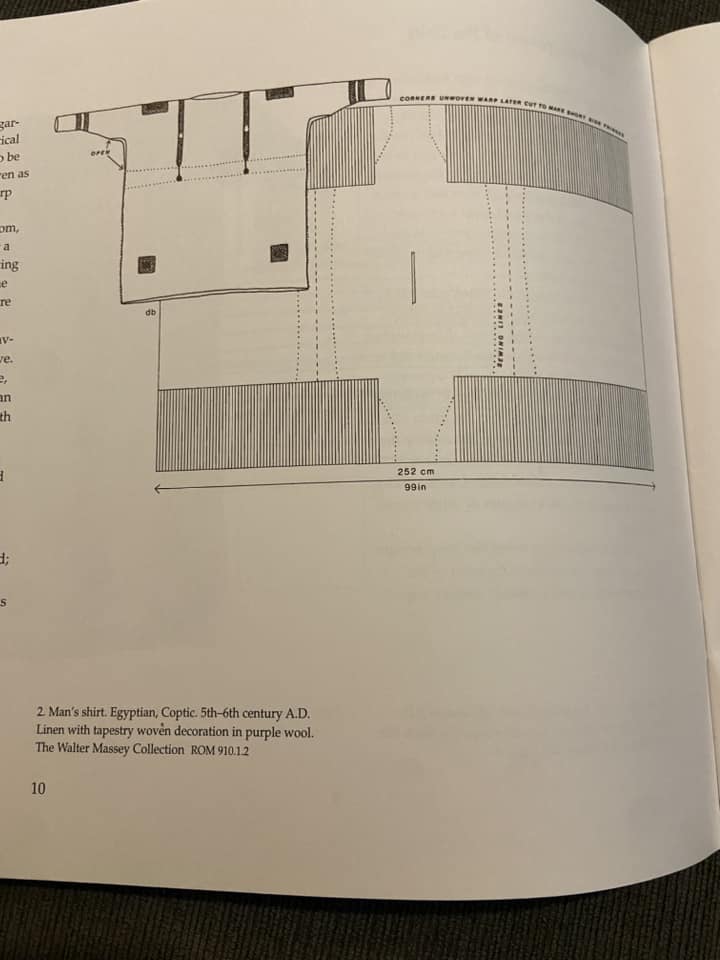
The version of this tunica that seemed to strike the fancy of Facebook was that with the underarm slits. This was the recreation that Ratna Drost posted that caught the attention of many, so I attempted to help by drafting this very fast pattern that I took a picture of in the epitome of professionalism. My knowledge leads me to believe that the slits are a product of Eastern influence coming from Sassanian Persia, and were not present in every garment. It’s a feature, and not a requirement, so if it’s something that doesn’t work for you, you do not have to include them, and you can still achieve the blousing.
This, coupled with the pattern from the “Cut My Cote” volume here:
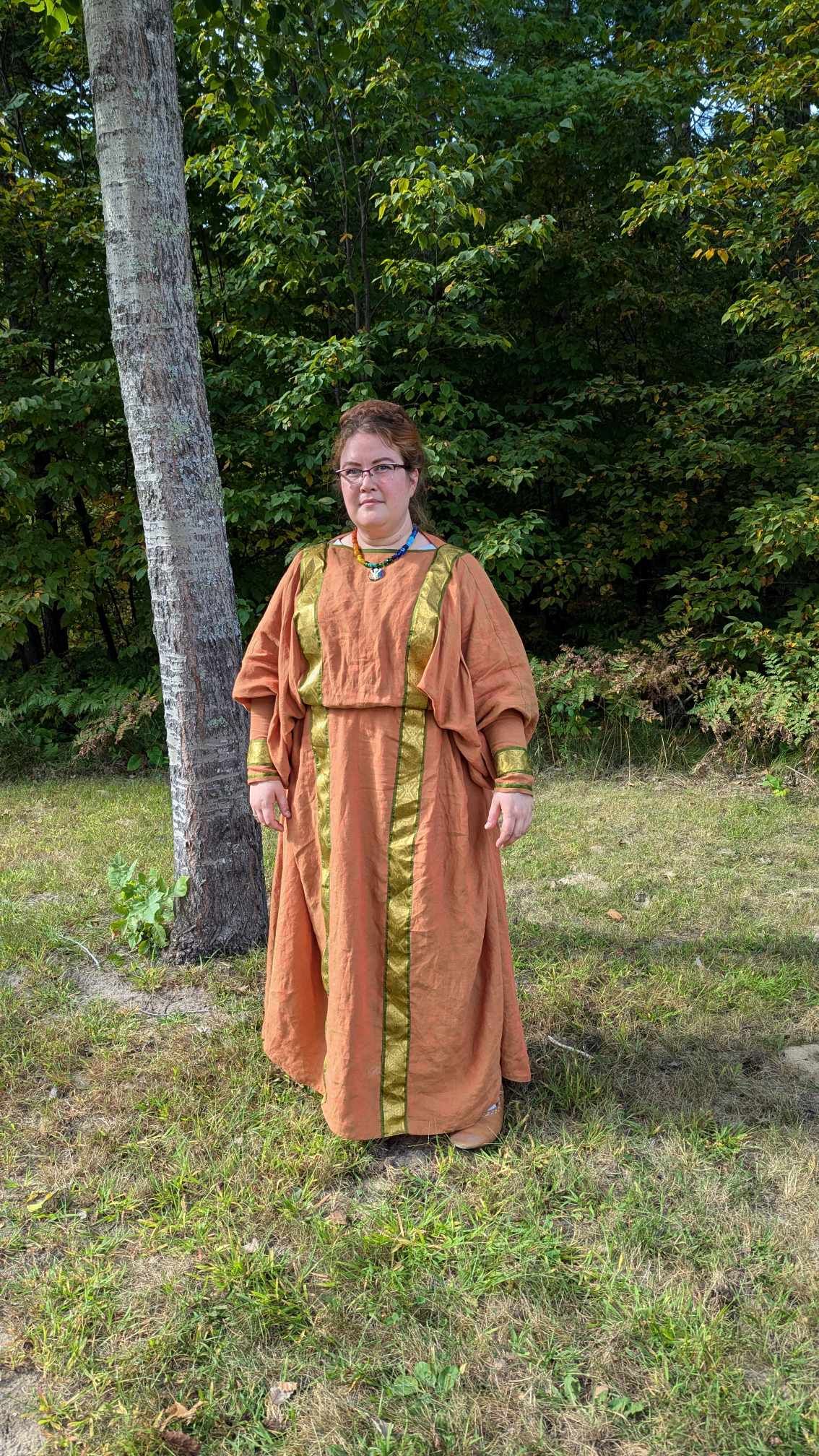
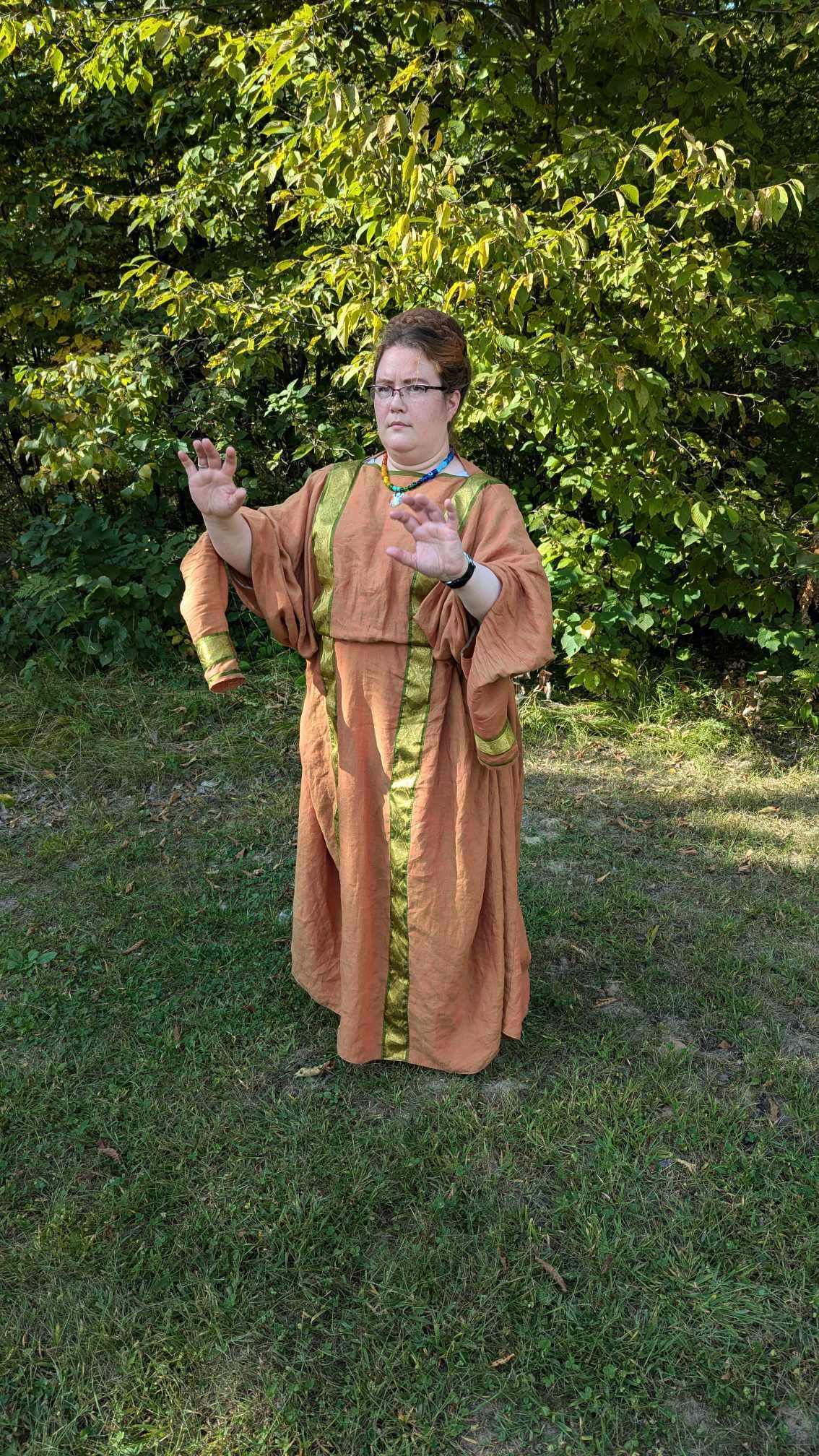
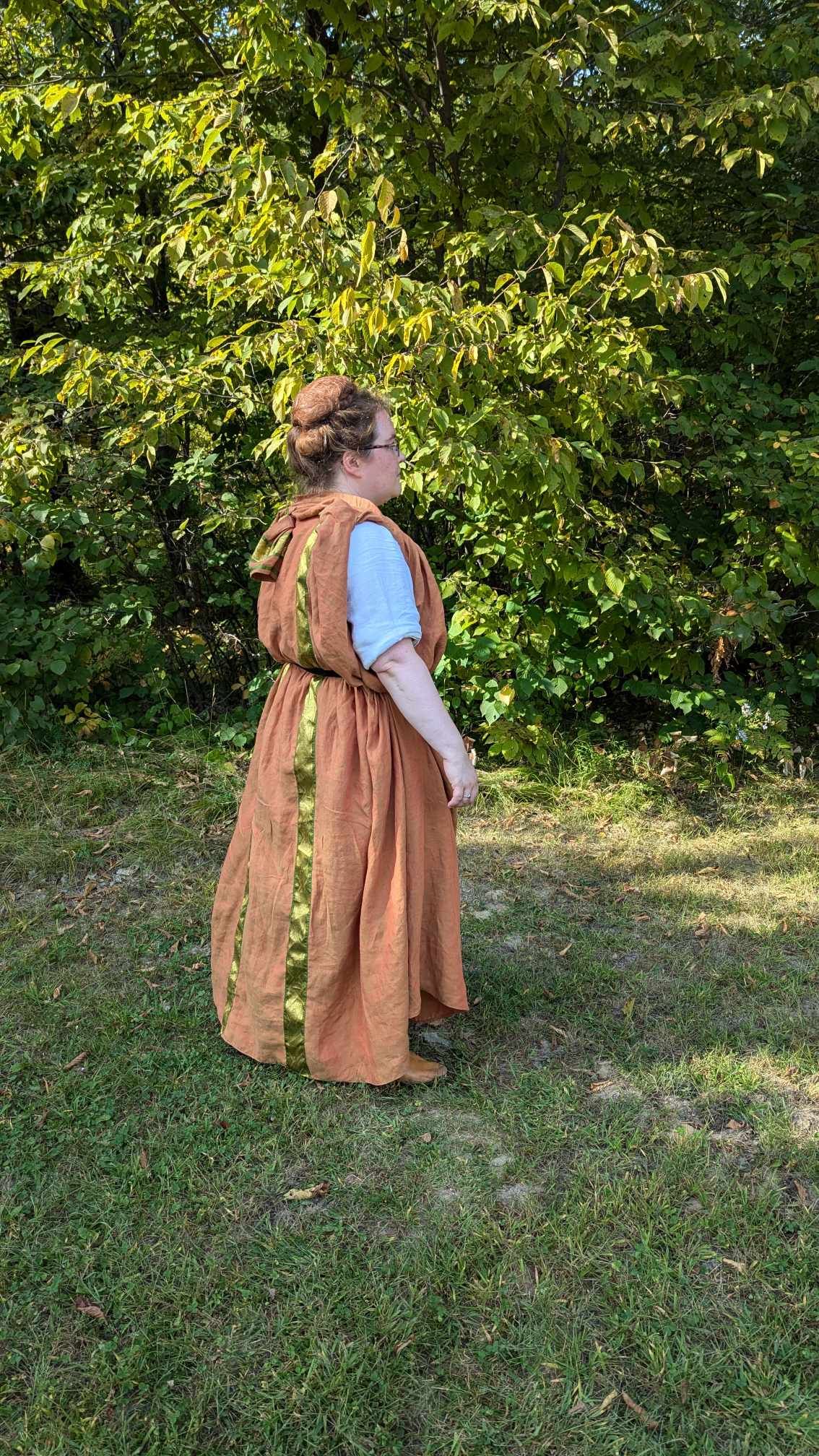
Seems to have done the trick in figuring out how these work. I have yet to make one, which always is HILARIOUS when I draw patterns and then don’t act on them, but Her Grace Duchess Petranella and Mistress Katerinka in Northshield decided to take up the challenge and give these a test run. here are some results. Kat’s garment is in orange linen, and Petranella’s is in blue wool. I love the variances in drape and what they were able to achieve with this fit. I asked Kat specifically if she could tie the sleeves up behind her back much like my midwife tunic, and she was able to do so with assistance from another. I am so grateful they were able to share these photos and their experience with me!









 Anna's New Rome
You must be logged in to post a comment.